Patient Engagement Strategies: Why Patients Don’t Come Back
Most practices pay to get a patient in once, then lose them through silence. Here’s where they drop off, and what keeps them coming back.
Most practices spend everything they have on getting a patient through the door once, and almost nothing on what happens after. Then they wonder why the calendar empties out every time the ads stop. Patient engagement strategies that bring patients back fix that, and for most clinics they cost less than any ad.
So this is about where patients quietly drop off, and the few things that keep them choosing you visit after visit.
What patient engagement means for a practice
You’ll find plenty of definitions. The HealthIT.gov patient engagement playbook talks about patients taking an active part in their own care, and that’s true. For a practice it boils down to something simpler. An engaged patient shows up, follows the plan, books the next visit, and sends a friend.
So patient engagement in healthcare covers every moment between the first enquiry and the fifth visit where the patient either hears from you or doesn’t.
Why patients don’t come back
It’s rarely because they were unhappy. Most of the time nobody gave them a reason to think about you again.
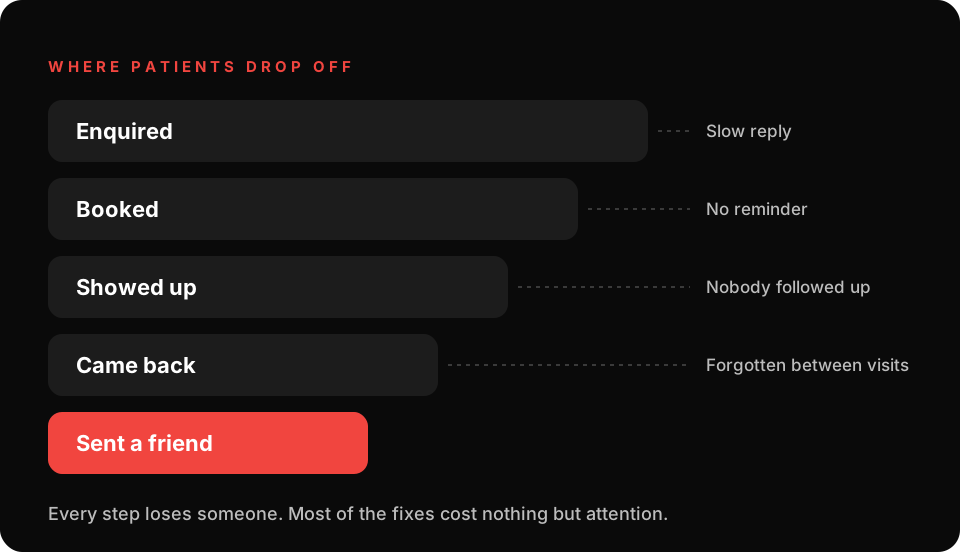
The enquiry sat in an inbox for a day, so they booked whoever called first. The appointment slipped their mind because nobody reminded them. The visit went fine, but nobody checked in afterwards. Six months later they need you again and can’t remember your name. Every one of those is a patient you already paid to get, and good patient engagement strategies close each of those gaps.
Engagement starts before the first visit
The best patient engagement strategies start before the patient ever walks in, right where patient acquisition hands over. The first visit is decided by how the first few days feel. When someone enquires, interest is at its highest and it drops by the hour, so the reply has to be fast and it can’t depend on whether the front desk is busy.
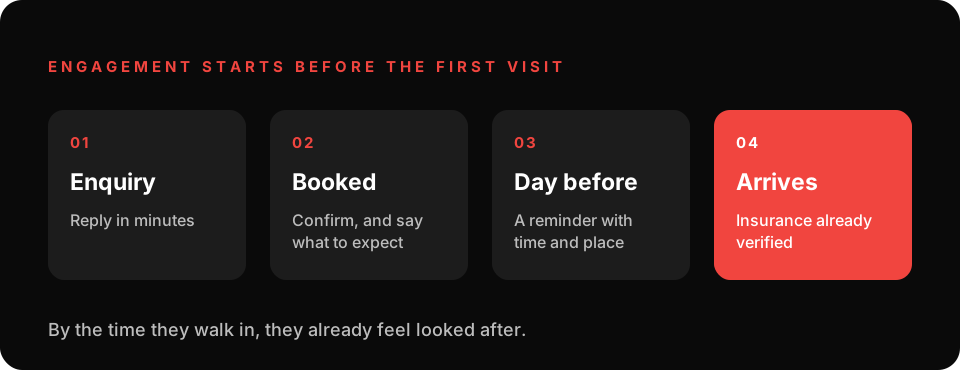
That’s why we build automations that reply, collect what the practice needs, and verify insurance before anyone picks up the phone. The patient who checks their own benefits before the call is already more committed than the one who didn’t, and they show up knowing what they’ll pay.
Keep the patients you already have
The cheapest patient you’ll ever get is one who already knows you. We learned that properly with a fiber supplement brand. Instead of paying for new customers on social media, we started with an email campaign to the people who had already bought from them, and brought a lot of them back. Only then did we run ads, and we ran them on Amazon, where the product actually sells. That’s what brought the brand into profit.
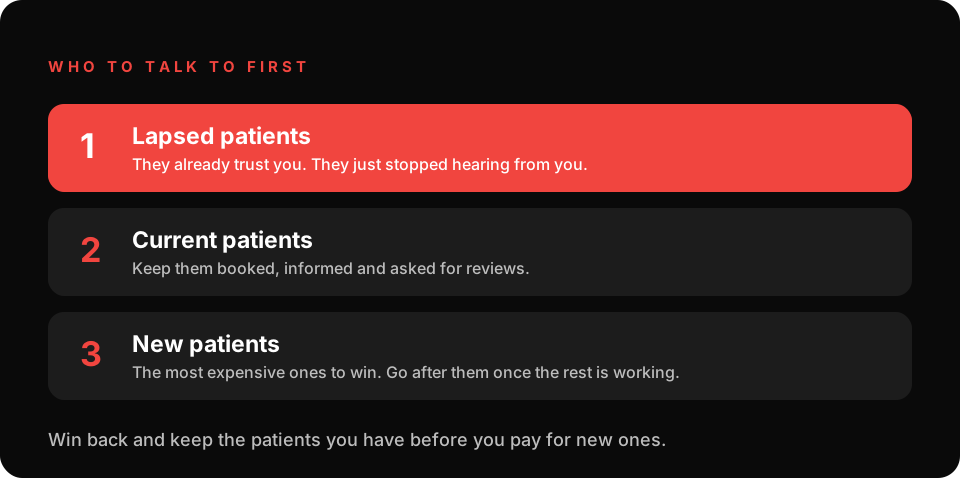
A practice works the same way. Your lapsed patients already trust you. They just stopped hearing from you. Win them back and keep the current ones booked before you spend on healthcare lead generation for new ones.
9 patient engagement strategies that bring patients back
- Reply in minutes, not days. Whoever answers first usually gets the booking.
- Confirm the appointment twice. Once when it’s booked, and again the day before.
- Tell them what to expect before they arrive. How long it takes, what to bring, where to park, and roughly what it costs.
- Verify insurance before the visit. A surprise at the front desk is the fastest way to lose a patient for good.
- Follow up within a couple of days. From a person, not a survey link. Ask how they’re doing.
- Book the next visit before they leave. A patient with a date on the calendar comes back. One who’ll call later often doesn’t.
- Send one useful email a month. About their condition or treatment, not your practice news, much like these healthcare email examples written for each visit.
- Win back lapsed patients first. Reach out to anyone overdue before you pay for new ones.
- Ask for the review when they’re happiest. That’s usually at the follow up, when they’re telling you they feel better.
None of this is complicated. The hard part is doing it for every patient, every week, without it falling on whoever happens to be at the desk.
Keeping patient engagement HIPAA safe
Reminders and follow ups about a patient’s own care are part of looking after them. Where practices slip is the detail. Keep texts to the time and the place, and leave the treatment out, because you never know who reads a phone. Marketing a different service to an existing patient is a separate question, so check it with whoever handles your compliance before you hit send. And keep all of it inside a HIPAA compliant CRM, not a spreadsheet and a personal inbox.
How to tell if it’s working
Forget open rates. Watch four numbers every month: how many booked patients actually show up, how many book their next visit before leaving, how many lapsed patients came back, and how many reviews came in. If those move, engagement is working. If they don’t, no amount of emails will fix it.
See where your patients are slipping away.
Six questions, then learn about the marketing opportunities in your area, including what happens to an enquiry after it reaches you.
Get your assessment →